How Service Businesses Win More Clients Without More Marketing
Most service businesses are not short of leads. They are losing the ones they already have.
Est. reading time:
Share this article:
Introduction
Every growing service business reaches a point where the founder concludes the answer to their next stage of growth is more marketing. The conclusion feels obvious. More leads at the top of the funnel should produce more clients at the bottom. The agency invests in content. The recruitment firm invests in outbound. The consulting firm invests in events and partnerships. Some of it works, most of it produces a trickle, and the founder ends up frustrated that the maths of marketing-led growth is so much harder than it looks from the outside.
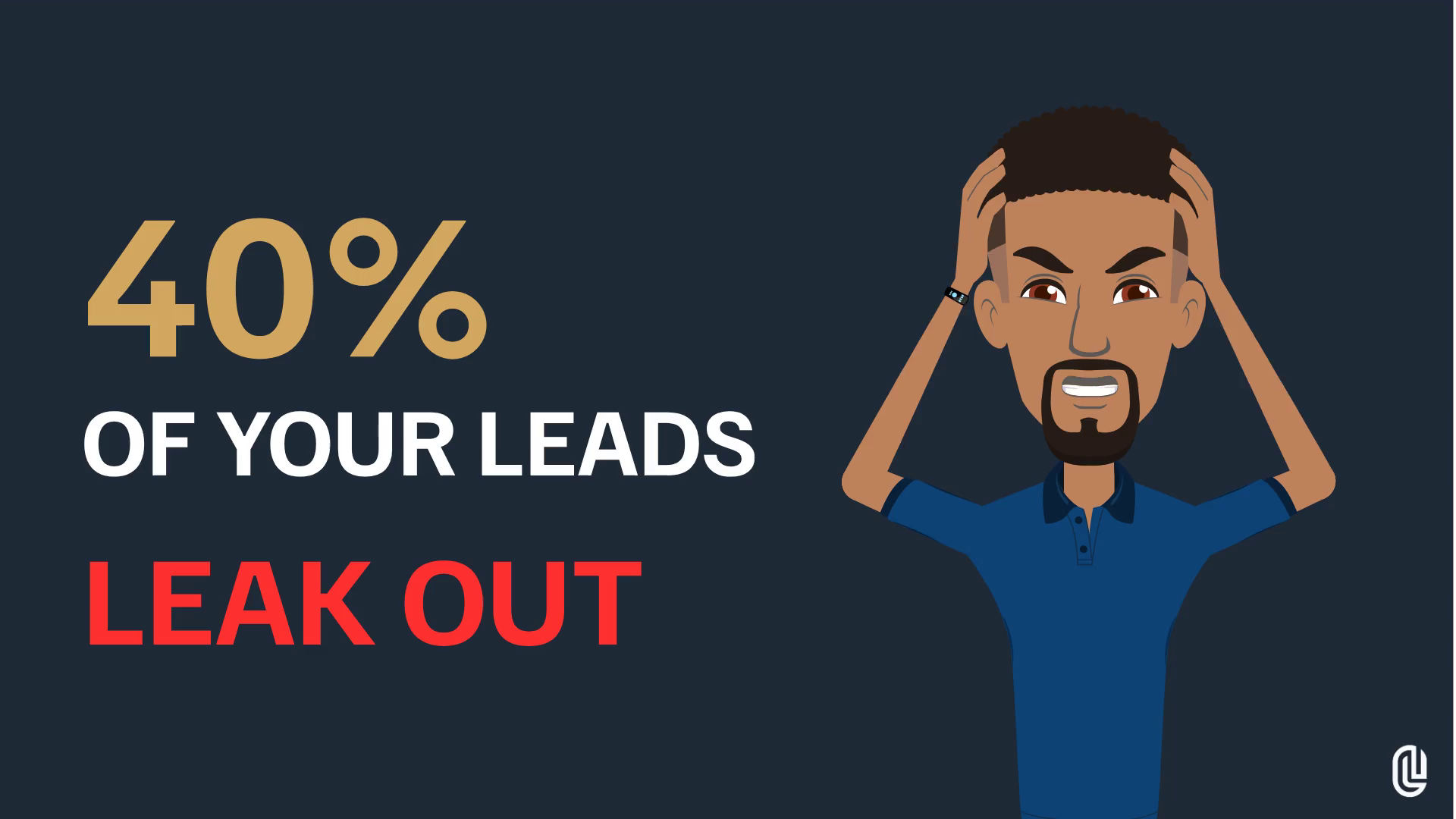
What almost nobody does first is look at the funnel they already have. Before adding more leads, they could ask what is happening to the leads that arrive now. The answer is almost always uncomfortable. A significant fraction of the leads the business already generates are being lost not to the competition, not to bad fit, not to budget objections, but to operational gaps that nobody is tracking. The business is leaking conversion at five or six different points and assuming the only lever is volume.
This is the most expensive misdiagnosis in service-business growth. Adding marketing on top of a leaky funnel produces marginal returns and a lot of frustration. Fixing the leaks first produces step-change returns from the same lead volume, and almost no founder does it first because the leaks are not visible until someone deliberately maps them. As covered in the piece on how to stop leads falling through the cracks, this is a structural problem, not a marketing one.
Where service businesses are actually losing clients
Most growing service businesses lose clients at five specific points in the funnel. The losses are operational, not commercial. The leads were interested. The fit was real. The business simply did not have the structure to convert what arrived.
Response delay. A lead submits a contact form, sends an enquiry, or comes through a referral. The clock starts. Research is consistent on this: response time is one of the strongest predictors of whether a B2B lead converts, with conversion rates falling sharply within the first hour and continuing to fall every day after. Most growing service businesses respond to inbound leads in days, not minutes. Some respond in weeks. By the time the founder gets back to the prospect, the prospect has either spoken to a competitor who responded faster, lost the urgency, or simply forgotten why they reached out. The lead is not lost to competition. It is lost to latency.
The follow-up gap. A first conversation happens. Both sides leave it feeling positive. The next step is supposed to be a follow-up: a proposal, a second call, a piece of information sent through. Then something else comes up for the founder, the follow-up gets deferred by a day, then a week, then quietly forgotten. The prospect, unsure whether the silence means lack of interest or lack of organisation, does nothing either. The deal that was sixty percent likely to close at the end of the first call is now ten percent likely a fortnight later, not because anything changed but because nothing happened. As covered in the piece on why leads get lost in growing businesses, this is the single most common failure point in a founder-led pipeline.
The dropped objection. A prospect raises a concern. Price, timing, scope, risk, doesn’t matter which. The founder, in the moment, addresses it well enough to keep the conversation going. The objection is logged informally in the founder’s memory and then not surfaced again. The prospect, unaddressed, decides the concern is real enough to defer the decision. The deal stalls. Six weeks later it is dead. The objection that killed it was the same objection that surfaced in the first conversation, which the founder had verbally addressed but never structurally resolved. No proposal was rewritten to handle it. No follow-up specifically named it. No case study was sent that directly answered the worry. The objection went underground and did its damage from there.
The lost referral. Existing clients refer new business. Often, the referral comes through casually: a name mentioned in passing, an introduction email that goes nowhere, a recommendation made in a conversation that the recommender then forgets to follow up on. Growing service businesses lose a meaningful share of their referrals not because the referrers stopped referring but because the business had no structure to capture and work the referrals that came in. The most valuable lead source the business has is being dropped at the first touchpoint because there is no process for handling it. As covered in the piece on why your best clients are not referring you, the problem is rarely that clients do not want to refer. It is that nothing happens with the referrals when they do.
The ghosted proposal. A proposal goes out. The prospect goes silent. After a week, the founder sends a polite chase. After another week, another. After a month, the founder assumes the deal is dead and lets it go. A meaningful fraction of those silent prospects are not dead. They are stuck — internal politics, a delayed decision, a competing priority, a question they didn’t want to ask. Without structured follow-up, those deals do not get unstuck. They quietly migrate from “warm pipeline” to “lost” without anyone deliberately deciding to give up on them. The deal that needed one more nudge at the right moment is now closed not because the prospect rejected the proposal but because the proposal rejected the prospect through silence.
Five points. Five different failure modes, none of which are about marketing. All of which are absorbing leads that the existing marketing has already paid for.
Why the operational fix is bigger than the marketing fix
A funnel that loses thirty percent of its leads to operational gaps produces, predictably, thirty percent fewer clients than it could. The cost of fixing the gaps is small and one-off. The cost of generating the additional leads to compensate is large and ongoing. Every month the funnel runs leaky, the business is paying twice: once for the marketing to bring the leads in, and again for the operational structure it does not have to convert them.
The maths cuts the same way at every stage of business growth, but the gap widens as marketing investment grows. A business spending five hundred pounds a month on lead generation can afford to lose some of what comes in. A business spending five thousand a month cannot. By the time the marketing investment is meaningful, every percentage point of conversion improvement is worth several thousand pounds a year. Most growing businesses keep adding to the marketing spend without making the conversion structure that turns the spend into clients.
The other reason the operational fix is bigger is that operational improvements compound. A faster response time helps every lead that comes in, this month and next year. A structured follow-up cadence converts the same lead pool more efficiently every quarter. A referral capture process turns one new referrer into a stream of clients over years. Marketing investments do not compound that way. They produce leads while you are paying for them and stop when you stop paying. The conversion structure, once built, keeps working.
What the structural fix actually is
The fix is not a heroic effort. It is four specific pieces of operational infrastructure, none of which are exotic, all of which most growing service businesses do not have.
A lead-handling system. Every inbound lead, from every channel, lands in one place with a clear owner and a clock running. Response time is tracked. The first response is committed to within a specific window, often an hour for the leads most likely to convert. Nothing has to be remembered, because the system surfaces what needs to happen. As covered in the piece on how to structure a sales pipeline that actually works, the right pipeline structure makes the right behaviour automatic and the wrong behaviour visible.
A follow-up cadence. Every conversation has a defined next step with a date attached. Every proposal has a defined follow-up sequence — three days, seven days, fourteen days, thirty days — that runs automatically if the prospect goes silent. The system surfaces deals that have not moved in a stage they should have moved through by now. The founder is not relying on memory to keep deals warm. The structure is doing it.
An objection log. Every concern raised in a sales conversation is recorded against the deal. The next interaction names it explicitly. Proposals address objections specifically, not generically. Patterns across deals get spotted — the same three objections coming up repeatedly is a signal about positioning, pricing, or scope that should change the business, not just the pitch. Without the log, the same objections kill deals quietly, repeatedly, for years.
A referral capture process. When an existing client mentions a name, that name goes into the system with the context, the relationship, and a defined next step. Referrers get a clear path to make the introduction and visible recognition when they do. The business asks for referrals at the right moments rather than hoping they happen. The result is that the referral channel, which most service businesses describe as their highest-converting lead source, actually produces the flow it could.
These four pieces are not marketing investments. They are operational ones. They cost a fraction of what equivalent marketing spend would cost, and they produce conversion improvements that the marketing spend can never produce because marketing acts on lead volume, and the bottleneck was never lead volume.
When more marketing is the actual answer
This is not an argument against marketing. There are stages of business growth where adding lead volume is exactly the right move. A business with a tight funnel — response within an hour, structured follow-up, objections handled, referrals captured — that wants to grow faster than its current lead volume allows is genuinely lead-constrained, and more marketing is the answer.
The honest test is simple. Look at the existing conversion path. If response times are under an hour, follow-up cadence is structured, objections are tracked, and referrals are captured, the funnel is tight and marketing investment is the next lever. If any of those four is broken, marketing investment will partially compensate for the leak rather than solve the actual problem, and the return on the spend will look mediocre even when the marketing itself is good.
Most growing service businesses fail this test on three or four of the four points. They invest in marketing anyway, because the operational gaps are invisible and the marketing fix is concrete. They then conclude the marketing did not work, when what actually happened is that the marketing did its job and the funnel could not.
The order matters
The order of operations for a growing service business is the same almost universally. Tighten the funnel first. Add marketing investment second. The reverse order is the common one and the expensive one.
A founder who tightens their funnel often finds the marketing investment they thought they needed turns out to be smaller than expected, because the existing lead volume is now producing more clients. The conversion improvement effectively pays for itself in additional revenue, frees up cash for the marketing investment that comes next, and means that when the marketing does scale, it scales into a system that converts what it brings in.
If your business is generating leads but converting fewer of them than you suspect it should, book a free 30-minute Systems Consultation. We will work through the five leak points specifically for your funnel and identify which structural fixes would have the biggest commercial impact for you. Book a consultation here.